Pressure Washing Before Painting in Newcastle
PSI guide by surface type, wait times before priming, and what Newcastle's salt air requires before any topcoat goes on.
Safety & Material Handling Disclaimer
Pressure washing and exterior paint projects involve ladders, high-pressure equipment, and chemical cleaners. Always wear PPE including safety goggles, gloves, and non-slip footwear. Buildings erected before 1970 may have lead paint — use a certified respirator before sanding or disturbing any painted surface. For licensed, insured execution, contact our local team.
Quick answer: Always pressure wash before painting exterior surfaces. Use 1,500–2,000 PSI for masonry and render, soft-wash mode for timber. Wait 24–48 hours for surfaces to dry before priming. In Newcastle, also wash off invisible salt residue — even on surfaces that look clean. Afterwards, the topcoat finish you choose matters too — see our coastal paint finish guide for which sheen levels hold up best against salt air.
Prefer to skip the prep? Our exterior painting in Newcastle service includes the wash, the drying time, and the repaint.
Washing walls and render
Brick, cement render, and fibre cement walls: Use 1,500–2,000 PSI with a fan-tip nozzle, working top to bottom to avoid streaking. This pressure removes mould and algae from eaves and downpipe areas while remaining safe for most masonry surfaces.
For painted render: Keep the nozzle 20–30 centimetres away and use a sweeping motion rather than holding it on one spot. A fixed nozzle chips existing coatings and creates bare patches that need extra primer. Move steadily across the surface for even cleaning.
Washing timber and weatherboard
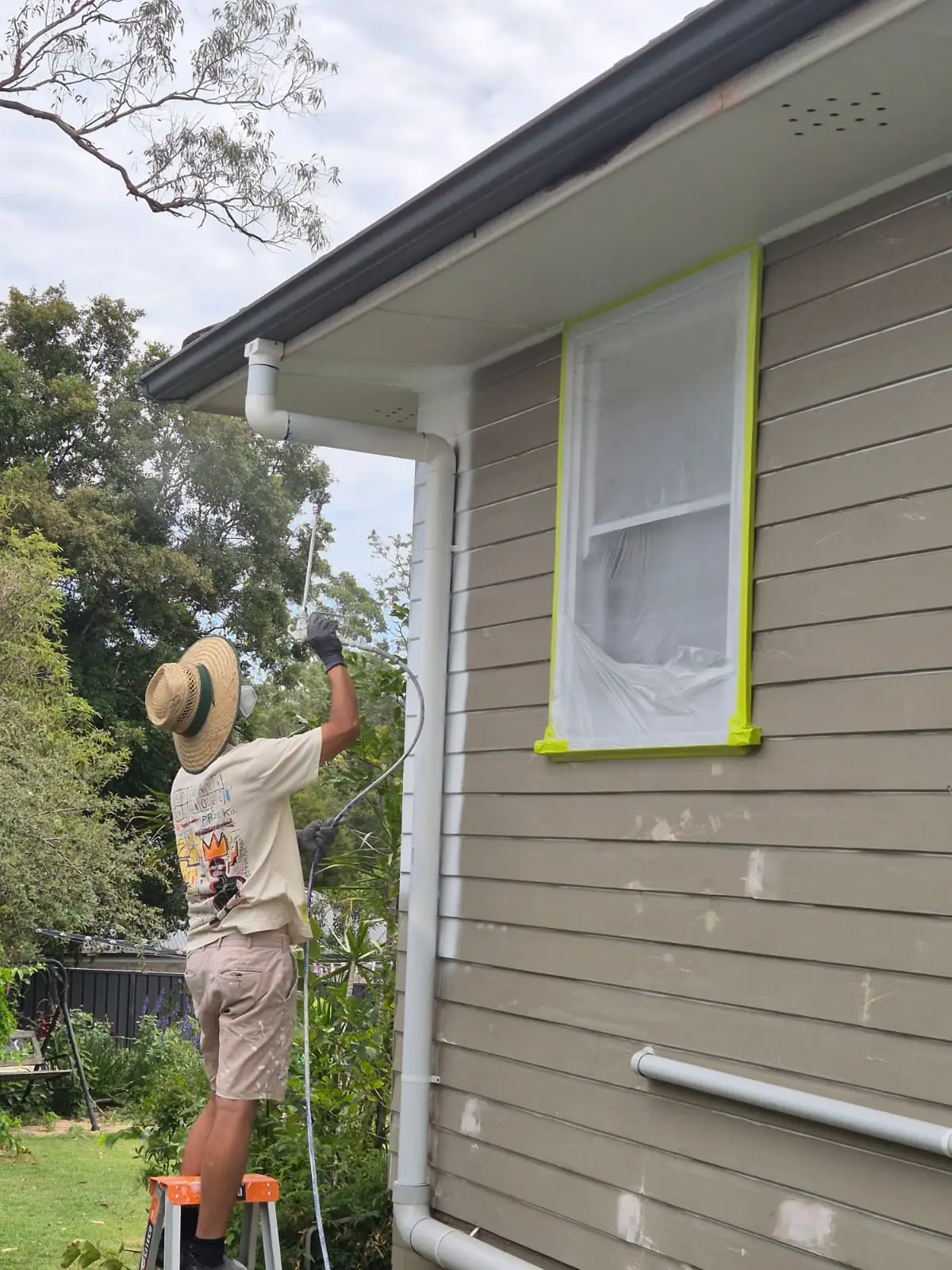
Soft-wash mode (low pressure + cleaning solution): The right approach for timber cladding. High pressure splinters fibres, forces water behind cladding, and damages window putty. So all of these lead to future peeling and lifting.
Application process: Apply mould treatment solution, dwell for 10–15 minutes, then rinse with a wide fan nozzle at low pressure. Allow 48–72 hours drying in dry weather before sanding or priming. Timber absorbs significantly more water than masonry and needs the full drying time. After painting, regular cleaning also protects the new finish — see why cleaning prolongs paint life on coastal homes.
Washing concrete and driveways
High-pressure treatment for concrete: Driveways, paths, and retaining walls tolerate 3,000 PSI with a rotary nozzle for tough staining. This pressure removes oil, grease, tyre marks, and mineral deposits that prevent paint or sealant adhesion.
Drying requirements: Concrete absorbs water deeply into the slab. Test with a moisture meter (readings below 5% are safe) or tape a clear plastic sheet to the surface for 24 hours — moisture collected underneath means the slab needs more time before coating.
Recommended wait times before painting
Painting onto a damp surface is one of the most common causes of peeling. Use these as minimums — add extra time in humid weather or overcast conditions, which are common on the Newcastle coast.
| Surface | Minimum Wait | Coastal Adjustment |
|---|---|---|
| Masonry / Render | 24 hours | Add 12–24 hours |
| Fibre Cement | 24–36 hours | Add 12 hours |
| Timber / Weatherboard | 48–72 hours | Add 24 hours |
| Concrete | 48–72 hours | Add 24 hours |
How to check if surfaces are dry enough
A moisture meter is the most reliable check — readings below 15% for timber and below 5% for masonry are safe for priming. Without a meter, the palm test works as a quick check: press your palm firmly against the surface and hold for 10 seconds. If it feels cool or damp, wait longer.
For concrete, tape a clear plastic sheet (about 30 cm square) flat to the surface. Check after 24 hours — if moisture has collected underneath, the slab is still releasing water and is not ready for coating.
DIY pressure washing vs professional — what's the difference?
You can hire a pressure washer for around $80–$150 per day. For a straightforward single-storey home with brick or render walls, DIY washing is feasible — provided you use the right PSI setting and nozzle for each surface.
The risk is on timber and older homes. Too much pressure on weatherboard or aged render removes more than dirt. It can split cladding, force water into the wall cavity, and strip out decades of paint. Repairing that costs far more than a professional wash done right the first time.
Also, coastal homes in Merewether, Bar Beach, and Stockton often have salt in joints and behind cladding. A standard rinse does not shift it. A professional wash uses the right solution for each surface. It also allows the correct dwell time and checks the result before calling it ready for paint.
Local example — Merewether coastal wash
A recent Merewether project required full soft-wash treatment on north and east elevations before an exterior repaint. The home was a 1970s weatherboard with original cladding still in good structural condition. Salt and mould had built up under eaves, in sheltered corners, and along the lower band of cladding closest to the ground.
We soft-washed the whole exterior at 1,200 PSI. We used a mould-treatment solution at 1:10, with a 15-minute dwell time per side. After rinsing, we allowed 60 hours of dry weather. The forecast showed afternoon sea breezes on day two. So we pushed to three full days before sanding and priming.
The coatings bonded well and passed a moisture-meter check before primer went on. The client noticed a clear difference in surface smoothness. Their previous repaint had skipped the wash step and started peeling within 18 months.
Need professional wash and paint?
We handle the full process: pressure washing, surface prep, priming, and topcoat. So you get one team, one quote, and a clean handover with a 5-year workmanship warranty.
Pressure Washing Before Painting FAQs
Short answers about washing, drying, and surface prep in Newcastle.
You might also find useful
 Prep
PrepHow to Prepare Walls for Painting in Newcastle
Clean, repair, sand, and prime step by step, plus the coastal prep that makes paint last.
Read guide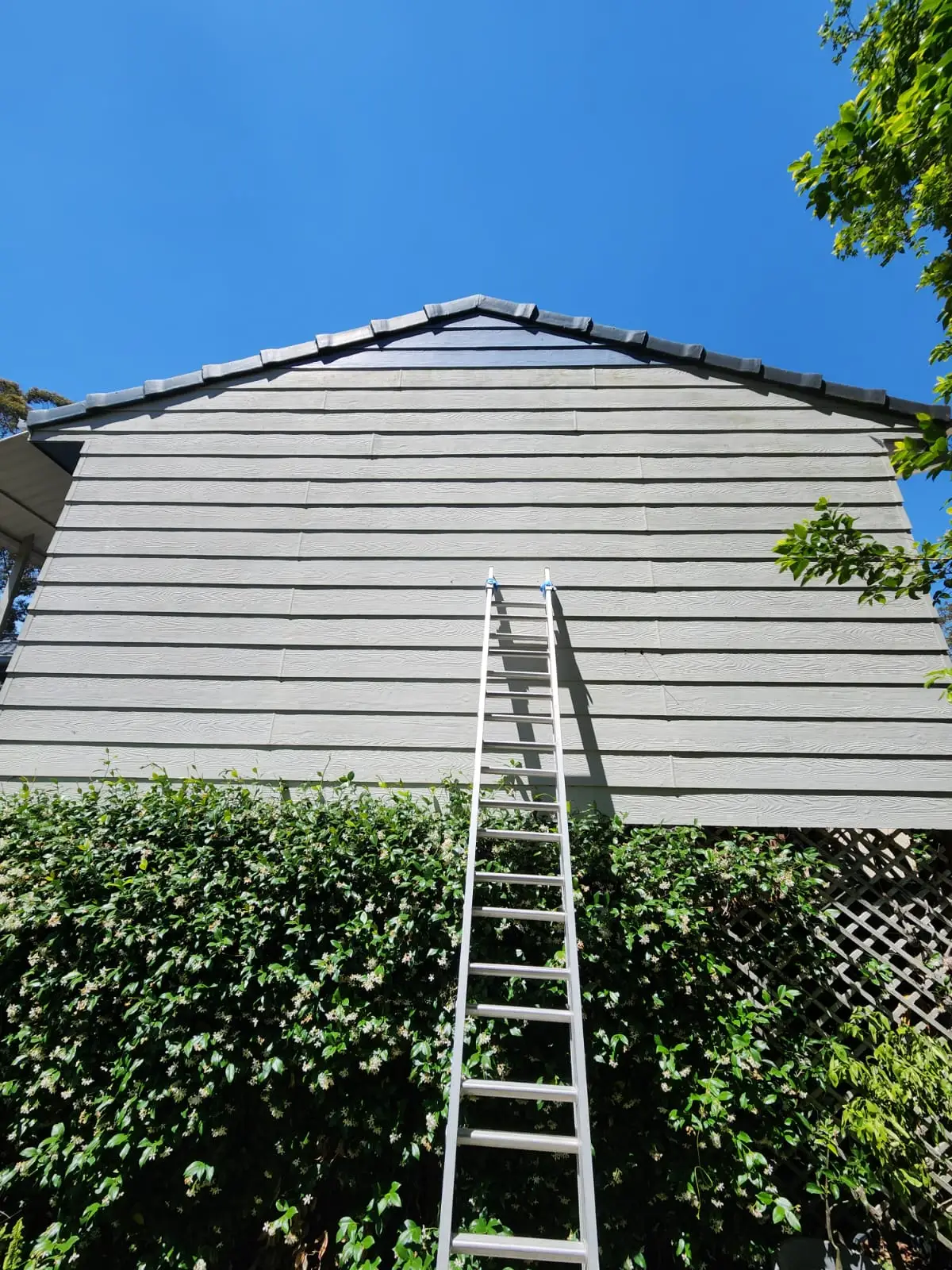 Prep
PrepPrepare Your House for Exterior Painting
Step-by-step prep checklist before exterior paint application.
Read guide Prep
PrepHow Many Coats of Exterior Paint?
Recommended coat counts by substrate and condition.
Read guide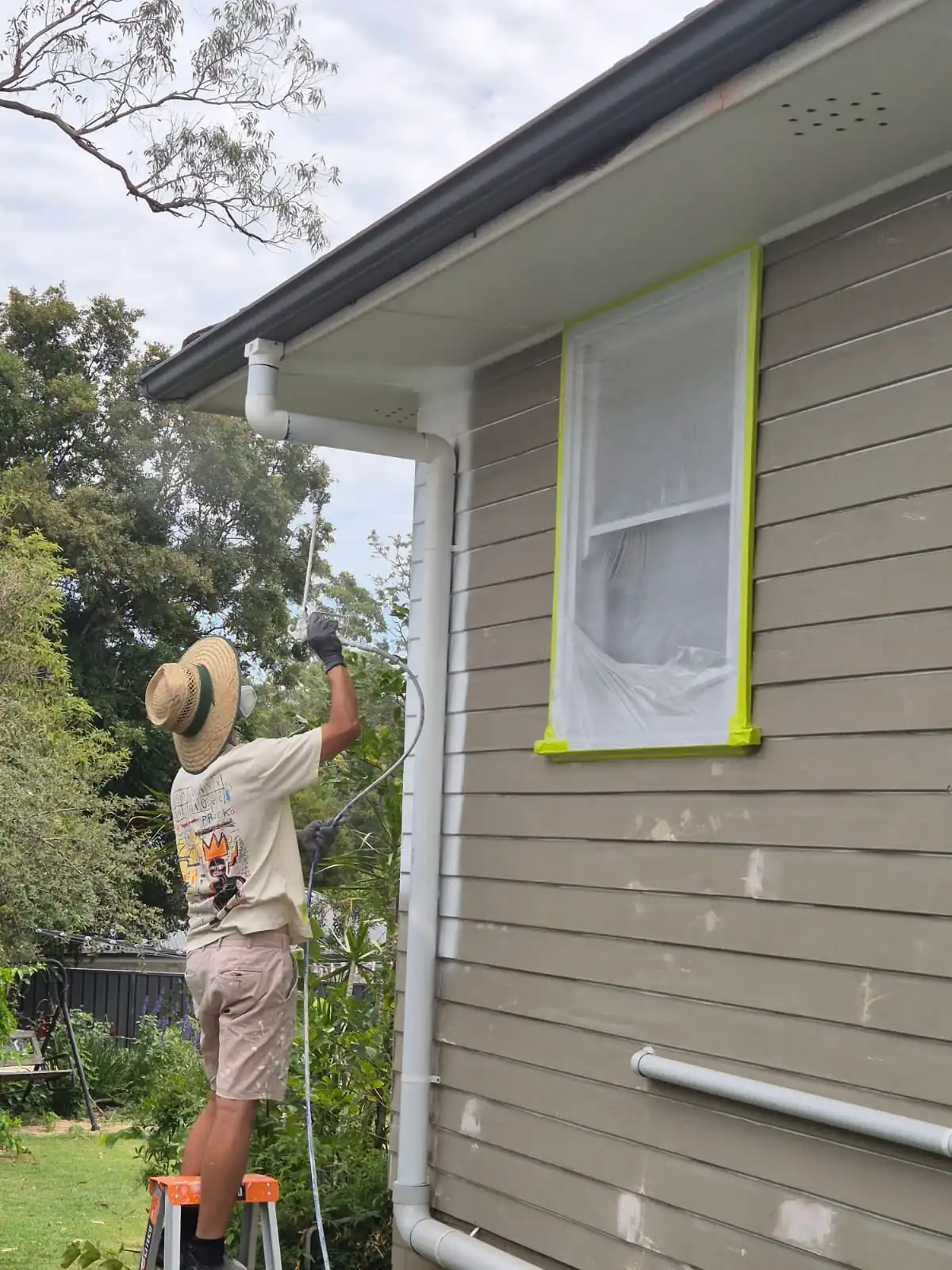
Get Your Free Estimate
Fill out the form for a free painting estimate today.
Our team will help you plan your project with clear pricing and transparent timelines. We keep communication simple and straightforward.
We reply within 2–4 hours on business days.
Step 1 of 4
Free · no obligation
Step 1 of 4: What do you need painted?
Hours
Mon-Sat:
7:00 AM - 6:00 PM
ABN
12 345 678 901
Service Areas
Proudly serving Newcastle, Lake Macquarie, Maitland, Port Stephens and the Cessnock & Hunter Valley, plus large exterior jobs on the Central Coast.
Prefer to talk, or need it sooner?
Skip the form. Call or email us directly, and we will get straight back to you.
Mon to Sat, 7:00 AM to 6:00 PM. We reply within 2 to 4 hours on business days.