Remove Rust Before Painting Newcastle Metal Work
Step-by-step guide to removing corrosion and priming metal before painting. Learn how to protect Newcastle coastal metal railings and roofs.
Safety & Material Handling Disclaimer
Rust removal and exterior paint prep involve physical and chemical hazards. Using pressure washers, climbing ladders, and handling rust treatments all require care. Also, surfaces on homes built before 1970 may contain lead paint. Always use appropriate PPE: a certified respirator, safety goggles, and heavy-duty gloves. For safe, fully insured work, contact our licensed local team.
Quick answer
Always remove rust before painting metal in Newcastle. First, clean the metal. Then apply a rust-inhibiting primer. Finally, use topcoats made for coastal exposure. Repainting gates, railings, or steel? Then good prep is the difference between a finish that lasts one year or five.
For cost expectations and required coating counts, see our exterior painting cost guide and exterior paint coat guide. To hand the whole job over, see our rust-proof metal painting in Newcastle.
Mechanical rust removal methods
Mechanical removal is the most reliable way to get back to clean metal. The method depends on the item size and how severe the rust is.
- Wire brush: Good for light surface rust on rails, brackets, and small fixtures. Works best on flat areas.
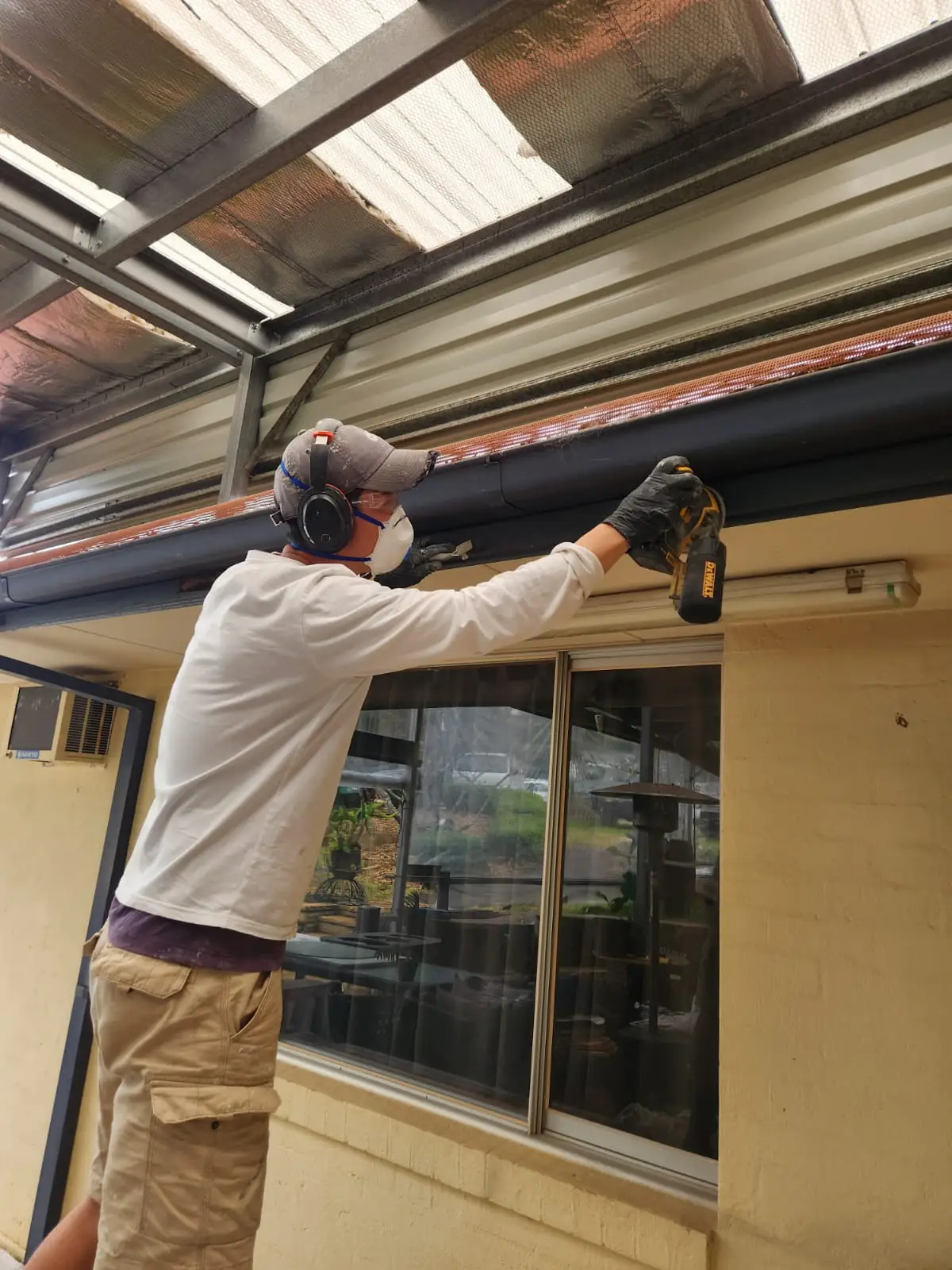
- Angle grinder with flap disc: Fast and effective on gates, structural steel, and larger panels. Removes heavy rust and old coatings quickly.
- Sanding (80–120 grit): Suitable for detailed areas and edges where a grinder cannot reach. Hand sand or use an orbital sander.
- Needle scaler: Used on heavy industrial rust. Less common for residential work but effective on thick scale buildup.
After mechanical removal, wipe the surface with a solvent or degreaser. This clears metal dust and oils. Then prime within a few hours to prevent flash rust, especially in humid coastal air.
Planning a repaint of gates, balustrades, or metal cladding? Then schedule proper rust removal before quoting. For a clearer view of the cost, compare the scope with our cost guide. Also check the number of finish coats in our coat guide.
Chemical rust removal and converters
Chemical options help when mechanical removal is not practical. Think inside box sections, on complex shapes, or on light rust.
- Rust remover solutions: Phosphoric acid or oxalic acid formulations dissolve oxidation. Apply, wait the recommended time, then rinse thoroughly and dry before priming.
- Rust converter: Converts iron oxide into a stable compound that can be painted over. Best for light to moderate surface corrosion where the rust is still firmly bonded — does not work on loose flaking scale.
- Naval jelly: A thick phosphoric acid gel that clings to vertical surfaces. Apply to rusted areas, leave for the recommended 10–15 minutes, then scrub with a stiff brush and rinse with water.
- Citric acid soak: A low-toxicity option for smaller removable items like brackets, hinges, or small fixtures. Submerge the item in a citric acid solution for several hours, then scrub with a wire brush, rinse, and dry immediately to prevent flash rust.
- Electrolytic removal: Used for heavily corroded items that can be removed and submerged. A low-voltage DC current in a sodium carbonate solution strips rust without damaging the base metal. Slower but highly effective for intricate pieces where mechanical removal would cause damage.
For mild to moderate rust on fixed structures, a rust converter is the most practical choice. This covers railings, gates, and balustrades. It works in place, needs no disassembly, and gives a paintable surface in one step. For heavy scaling and deep pitting that won't come off, do mechanical prep first. Then use a rust converter on the stable rust that remains. Citric acid and electrolytic removal suit items you can take off the structure entirely.
Choosing the right rust primer
After rust removal, the right primer seals the metal and prevents new corrosion from forming under topcoats. Choose based on the metal type and exposure level.
- Zinc-rich primer: Provides galvanic protection. Best for structural steel and gates exposed to weather.
- Red oxide primer: A traditional option for general steel. Good adhesion and reasonable corrosion resistance.
- Rust converter primer: Combines conversion and priming in one step. Convenient for light rust on complex shapes.
- Epoxy primer: High performance for harsh environments. Used on industrial and marine-grade metal work.
Which primer should I use?
| Primer type | Best for | Dry time | Coastal suitability |
|---|---|---|---|
| Zinc-rich | Structural steel, gates, balustrades | 1–2 hr touch, 4–6 hr recoat | Excellent — galvanic protection |
| Red oxide | General steel, interior metal | 1–2 hr touch, 4 hr recoat | Good — standard protection |
| Rust converter primer | Light rust on complex shapes | 2–4 hr touch, 24 hr recoat | Moderate — use on stable rust only |
| Epoxy primer | Harsh coastal environments, marine | 2–4 hr touch, 8–12 hr recoat | Excellent — maximum protection |
For Newcastle coastal properties, zinc-rich or epoxy primers are the minimum standard on exposed metalwork. The right primer extends the finish life and reduces how often repainting is needed. For guidance on which topcoat finish holds up best on coastal exteriors, see our paint finish guide for coastal homes.
Coastal metal work tips for Newcastle
Newcastle's salt air speeds up metal rust a lot. Homes within a few kilometres of the coast rust faster. This shows most on south and east-facing metal.
- Inspect metal railings, gates, and fixtures annually for early rust signs
- Wash salt off metal surfaces regularly with fresh water
- Use marine-grade or coastal-rated primers for exposed metal
- Apply topcoats with UV and salt resistance for longer service life
- Prime bare metal the same day after cleaning — flash rust forms fast in humid air
Newcastle project — rust treatment on steel gates and balcony railing
A client in Stockton called us about a pair of heavy steel entry gates and a balcony railing. Both had been rusting for several years. They were pitted with deep rust, and the old paint had blistered and lifted. This is typical. Salt-air moisture gets behind a failed topcoat and speeds up rust underneath.
First, we used an angle grinder with a flap disc. This took the loose scale and blistered coating back to bare metal. Then we applied naval jelly to the pitted rust. We left it 15 minutes, scrubbed with a stiff brush, then rinsed and degreased. We primed the gates with a zinc-rich primer the same afternoon. That was within two hours of cleaning, to beat the flash rust. The balcony railing got an epoxy primer, as it faces south and is more exposed. Both surfaces then got two topcoats of a salt-air rated enamel.
The client had been told before that a coat of paint over the rust would do. That approach failed within 18 months. Our prep and primer system should last five to seven years before the next check. That is a big gain for a coastal property near the waterfront.
Need help with metal prep and painting?
We handle rust removal, priming, and protective coatings on gates, railings, structural steel, and more. Get in touch for a free on-site review.
Rust Removal Before Painting FAQs
Common questions about rust treatment and metal painting.
You might also find useful
 Prep
PrepHow to Prepare Walls for Painting in Newcastle
Clean, repair, sand, and prime step by step, plus the coastal prep that makes paint last.
Read guide Prep
PrepHow Many Coats of Exterior Paint?
Recommended coat counts by substrate and condition.
Read guide Prep
PrepSurface Preparation for Coastal Painting
How salt-air preparation improves paint life in Newcastle.
Read guide
Get Your Free Estimate
Fill out the form for a free painting estimate today.
Our team will help you plan your project with clear pricing and transparent timelines. We keep communication simple and straightforward.
We reply within 2–4 hours on business days.
Step 1 of 4
Free · no obligation
Step 1 of 4: What do you need painted?
Hours
Mon-Sat:
7:00 AM - 6:00 PM
ABN
12 345 678 901
Service Areas
Proudly serving Newcastle, Lake Macquarie, Maitland, Port Stephens and the Cessnock & Hunter Valley, plus large exterior jobs on the Central Coast.
Prefer to talk, or need it sooner?
Skip the form. Call or email us directly, and we will get straight back to you.
Mon to Sat, 7:00 AM to 6:00 PM. We reply within 2 to 4 hours on business days.